Daniel 9
Hope that kneels in confession
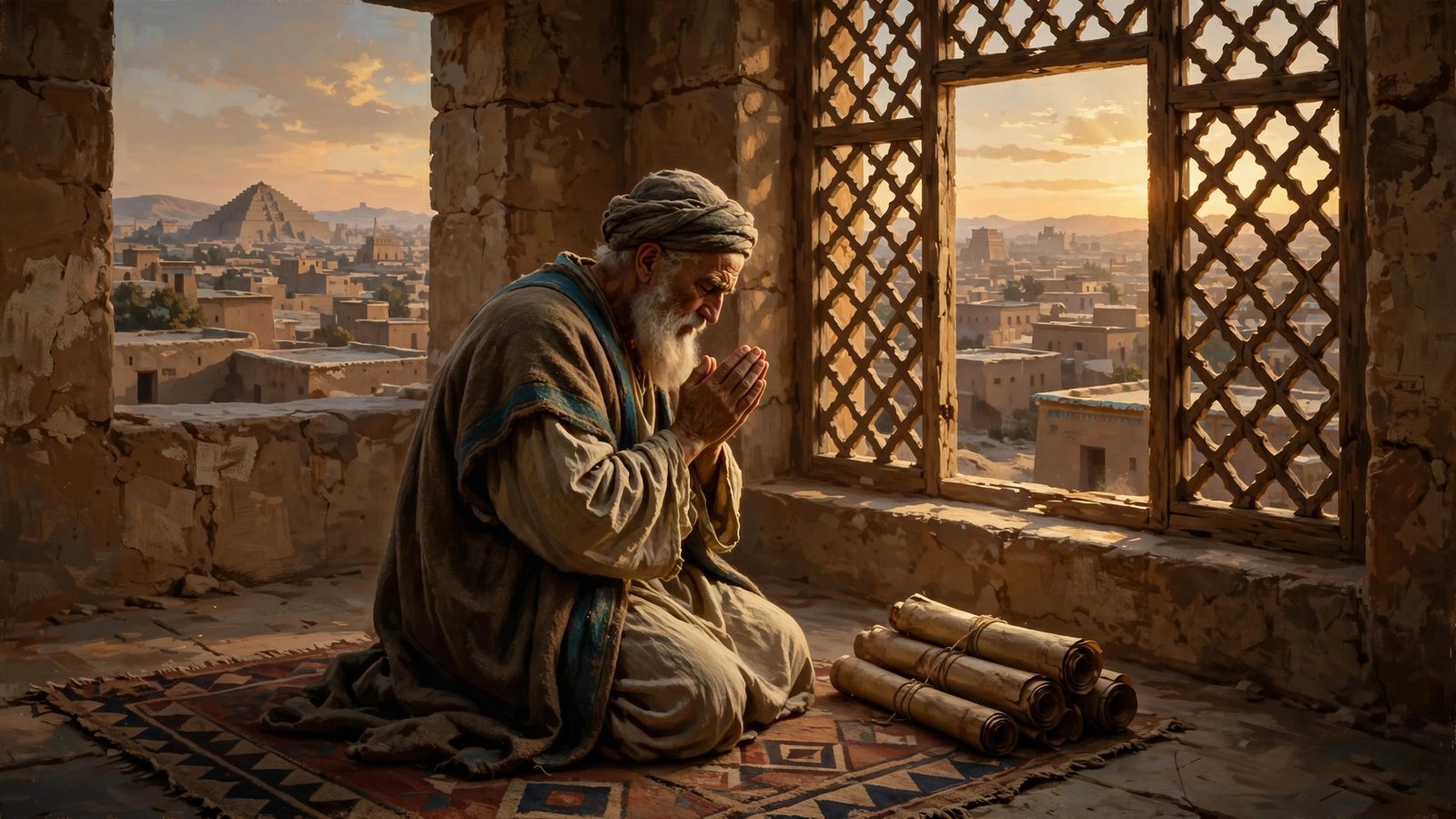
Biblical hope produces confession, intercession, and trust in God’s redemptive timetable.
Hope that kneels in confession

Reading Jeremiah, Daniel recognizes that Jerusalem’s seventy-year desolation is nearing its appointed end. The promise does not make him passive; it drives him to fasting, confession, and intercession. Although Daniel’s personal faithfulness has been evident, he says “we,” identifying with his people’s sin and appealing to God’s mercy and covenant faithfulness.
What God says here
- Daniel 9:2–3Daniel understands Jeremiah’s seventy years and turns to God with prayer and fasting.
- Daniel 9:5Daniel confesses, “We have sinned and done wrong.”
- Daniel 9:9Mercy and forgiveness belong to the Lord, though His people have rebelled.
- Daniel 9:18Daniel appeals not to human righteousness but to God’s great mercy.
- Daniel 9:24Seventy weeks are decreed concerning the people and holy city to address sin and bring lasting righteousness.
Talk it through
1. What moved Daniel to pray?
Leader notes
He read Jeremiah’s prophecy and understood the season (Daniel 9:2–3). Scripture informed both the content and urgency of his prayer; promises became reasons to seek God, not excuses for passivity. Follow-up: Where do you see this pressure or pattern in your own setting?
2. Why did Daniel say “we” when confessing national sin?
Leader notes
He identified with God’s people rather than standing above them as a critic (Daniel 9:5–11). Corporate confession does not erase personal responsibility; it expresses humility and solidarity. Follow-up: What part of this truth most challenges your usual response?
3. What qualities of God anchor the prayer?
Leader notes
God is great, faithful to covenant, righteous, merciful, and forgiving (Daniel 9:4, 7, 9). Daniel looks honestly at sin because he looks confidently at God’s character. Follow-up: What would one faithful action look like this week?
Talk it through
4. On what basis did Daniel ask God to act?
Leader notes
Not on Israel’s righteousness, but on God’s great mercy, name, and honor (Daniel 9:18–19). This anticipates the gospel pattern of receiving grace rather than presenting merit. Follow-up: How should this truth change the way we pray?
5. What is the central hope of the seventy weeks?
Leader notes
God has a determined plan to deal with transgression, provide atonement, and bring everlasting righteousness (Daniel 9:24). The details matter, but God’s redemptive purpose is the center. Follow-up: Who could help you live this out with courage and humility?
6. How can we discuss different end-times views in truth and love?
Leader notes
Read the text carefully, distinguish certainty from inference, represent other views fairly, and refuse to make a timetable a test of fellowship when the gospel is shared (Daniel 9:2–3, 23–27). Follow-up: What would speaking the truth in love look like here?
This week
Daniel 9:18 (KJV) — “O my God, incline thine ear, and hear; open thine eyes, and behold our desolations, and the city which is called by thy name: for we do not present our supplications before thee for our righteousnesses, but for thy great mercies.”
Apply it: Use Daniel’s pattern to pray: praise God’s character, confess specifically, remember His Word, and appeal to His mercy for your church and community.
Merciful Lord, teach us to confess without excuses and to intercede with confidence in Your character and redemptive plan. Shape our prayers by Your Word and anchor every request in Your mercy.