Daniel 5
Weighed in God’s balance
God weighs human kingdoms, and presumed privilege never replaces repentance.
Weighed in God’s balance

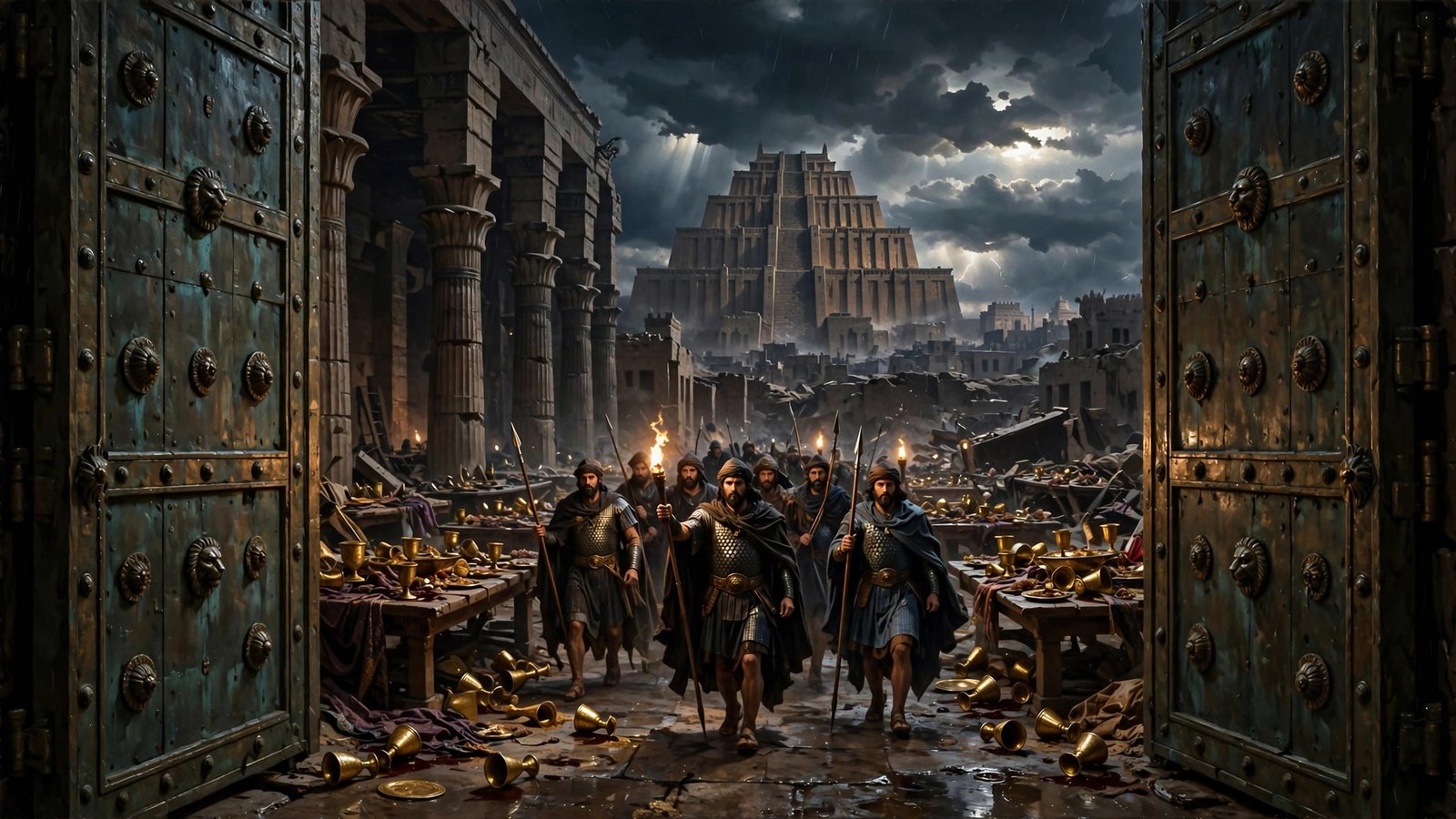
Belshazzar hosts a lavish feast while danger presses around Babylon. He turns sacred vessels from Jerusalem into party cups and praises idols, treating God’s holiness as entertainment. A mysterious hand writes judgment on the wall, and the court’s confidence collapses. Daniel is summoned and refuses to be bought by royal gifts.
What God says here
- Daniel 5:22Belshazzar knew Nebuchadnezzar’s story but did not humble his heart.
- Daniel 5:23He lifted himself against the Lord of heaven and praised lifeless idols instead of the God who held his life.
- Daniel 5:25–28The writing announces that God has numbered, weighed, and divided the kingdom.
- Daniel 5:30–31Belshazzar is killed that night, and Darius the Mede receives the kingdom.
Talk it through
1. Why was the use of the temple vessels especially serious?
Leader notes
Belshazzar knowingly treated objects set apart for God as tools for idolatrous celebration (Daniel 5:2–4, 23). His action openly mocked the Lord who had preserved his life and authority. Follow-up: Where do you see this pressure or pattern in your own setting?
2. What did Belshazzar know that increased his responsibility?
Leader notes
He knew how Nebuchadnezzar had been humbled and restored, yet he chose pride (Daniel 5:18–22). Received truth creates responsibility; family history and religious knowledge are not neutral. Follow-up: What part of this truth most challenges your usual response?
3. Why did Daniel refuse to be impressed by the promised rewards?
Leader notes
The message belonged to God and could not be purchased (Daniel 5:16–17). Daniel’s independence gave him freedom to tell the truth without adjusting it for personal gain. Follow-up: What would one faithful action look like this week?
Talk it through
4. What does it mean to be “weighed and found wanting”?
Leader notes
God’s standard exposed the emptiness beneath Belshazzar’s display (Daniel 5:27). The phrase calls us to examine life before God rather than measuring ourselves by applause or comparison. Follow-up: How should this truth change the way we pray?
5. Why is the sudden timing of judgment important?
Leader notes
The party assumed security, but the kingdom fell that night (Daniel 5:30–31). Delayed consequences can create false confidence; today is the proper time for repentance. Follow-up: Who could help you live this out with courage and humility?
6. How should this chapter lead us toward the gospel rather than despair?
Leader notes
All people fall short, but Christ offers forgiveness and His righteousness to repentant believers (Daniel 5:22–23, 27). God’s warning is mercy when it turns us from pride to trust and obedience. Follow-up: What would speaking the truth in love look like here?
This week
Daniel 5:23 (KJV) — “But hast lifted up thyself against the Lord of heaven; and they have brought the vessels of his house before thee, and thou, and thy lords, thy wives, and thy concubines, have drunk wine in them; and thou hast praised the gods of silver, and gold, of brass, iron, wood, and stone, which see not, nor hear, nor know: and the God in whose hand thy breath is, and whose are all thy ways, hast thou not glorified.”
Apply it: Within twenty-four hours, make one concrete act of repentance in an area where familiarity has replaced obedience.
Holy God, keep us from presumption. Teach us to honor You with the life, time, and influence You have placed in our hands. Lead us into honest repentance and grateful dependence on Christ.