Daniel 3
Faithfulness in the fire
Faithfulness worships God without conditions, even when obedience is costly.
Faithfulness in the fire

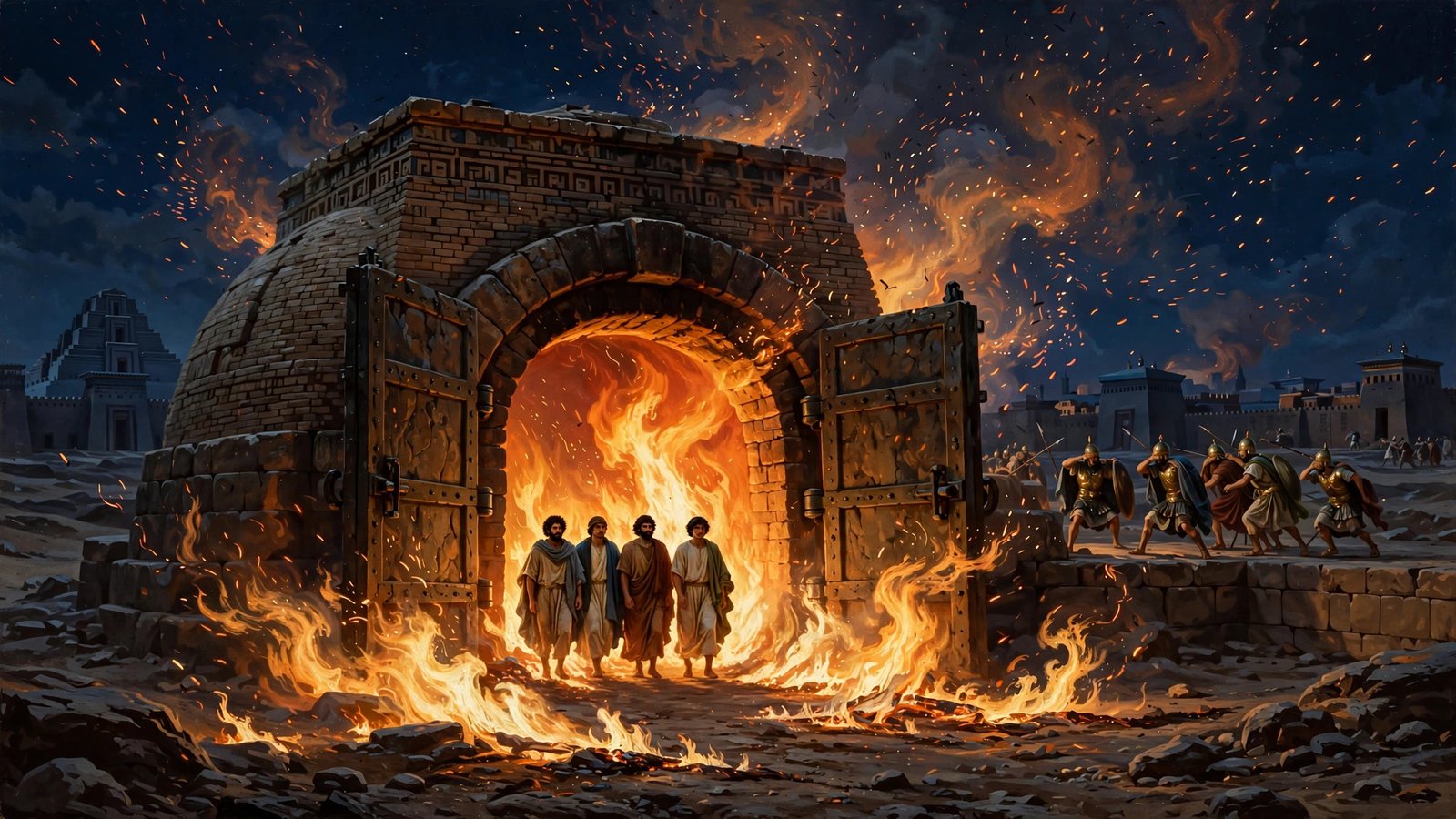
Nebuchadnezzar’s enormous image turned public loyalty into an act of worship. Shadrach, Meshach, and Abednego refused to bow, even when offered another chance and threatened with a furnace. Their answer joins confidence with surrender: God is able to rescue, but obedience does not depend on rescue. Bound men are thrown into the fire, yet the king sees four men walking free.
What God says here
- Daniel 3:12The three Hebrews refuse to serve Babylon’s gods or worship the golden image.
- Daniel 3:17They know God is able to deliver them from the furnace.
- Daniel 3:18Even if He does not, they will not worship the image.
- Daniel 3:25The king sees four men walking unbound in the fire.
- Daniel 3:28Nebuchadnezzar praises the God who delivered servants willing to risk their lives rather than worship another god.
Talk it through
1. Why was bowing to the image more than a harmless public gesture?
Leader notes
It was an act of worship and allegiance (Daniel 3:4–6, 12). The three men could not treat outward obedience as spiritually neutral when the king explicitly demanded idolatry. Follow-up: Where do you see this pressure or pattern in your own setting?
2. What is powerful about “even if He does not”?
Leader notes
Their faith rested in God’s worthiness, not in a guaranteed escape (Daniel 3:16–18). Biblical faith trusts God’s power and submits to His wisdom without bargaining. Follow-up: What part of this truth most challenges your usual response?
3. Does this chapter promise believers will always be physically rescued?
Leader notes
No (Daniel 3:18). God sometimes delivers from suffering and sometimes sustains His people through death. The faithful response is obedience; the outcome belongs to God. Follow-up: What would one faithful action look like this week?
Talk it through
4. What may the fourth figure teach us without overclaiming?
Leader notes
God was unmistakably present with His servants in the furnace (Daniel 3:24–25). Christians have proposed angelic or Christ-centered readings, but the passage itself does not settle the identity for us. Follow-up: How should this truth change the way we pray?
5. Why did the king offer a second chance?
Leader notes
He likely expected fear to overcome conviction (Daniel 3:13–15). Repeated pressure often tests whether a decision is settled or merely emotional. Follow-up: Who could help you live this out with courage and humility?
6. Where are believers tempted to “bow” for acceptance or safety?
Leader notes
Possible areas include work ethics, sexual standards, speech, public confession of Christ, and social pressure (Daniel 3:16–18). Keep the conversation specific, gracious, and free of exaggeration. Follow-up: What would speaking the truth in love look like here?
This week
Daniel 3:18 (KJV) — “But if not, be it known unto thee, O king, that we will not serve thy gods, nor worship the golden image which thou hast set up.”
Apply it: Tell one trusted believer about an obedience decision you will carry out regardless of the outcome, and ask them to pray for you.
Faithful God, make us courageous without pride and steady whether You deliver us from the fire or meet us in it. Keep our worship undivided and our trust steady whatever the outcome.